Monday, August 31, 2015

Taking a Patient History

You are going to design a format for a patient's clinical history.

Look a this guide and in pairs design a format (and include the questions you need to ask in order to fill it out).

Next class you are going to use it in a role play

Monday, August 24, 2015

Connective Tissue

Look at this video and this other one and in your notebook draw a chart/diagram of the Classification of Connective Tissue.

Include an example of each kind of Connective Tissue.
Search the web and find the different functions of Connective Tissue, include them 


Monday, August 10, 2015

The Cell

In today's web project you are going to work in teams to create a questionaire/quiz about The Cell. you can make open questions, or multiple choice.Work in teams of 2 or 3, Don't forget to include an answer key. Minimun 20 questions

You can search the web to find information for your questionaire, example: HERE or HERE


Friday, June 5, 2015

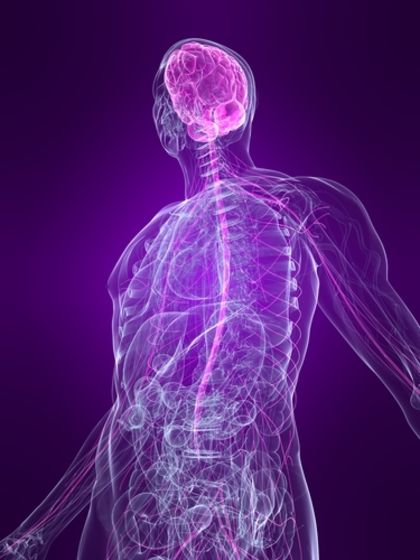
The Nervous System

Click on this link, read the articles, copy and answer the exercises on pages 2 and 3, paste the answers on a word file.

Search the web and find a diagram of a neuron indicating the different parts, copy it and paste it on the same file.

Click on this link, copy the exercise on the same file, and answer it by highlighting the correct linking word.


Send the file to my e-mail with the subject: TEyourname P3WP4

Respiratory System


Go to this link, Read the article about the respiratory system on page 2, and answer the exercises on pages 2 and 3.


Click on the Pulmonary Edema Transcript (a word document will download), read the text and answer the following questions:

TRUE OR FALSE (If the answer is false, correct the sentence)

  1. Pulmonary Edema is caused by an accumulation of fluid in the interstitial space between capillaries and lung alveoli. The net effect is hypoxia.
  2. With regard to pulmonary edema the only diffusion factor that changes is diffusion distance.
  3. As the distance between pulmonary and capillary blood and the alveolar wall increases the rate of diffusion of oxygen and carbon dioxide also increases.
  4. In the cardiogenic pulmonary edema there is a decrease in the pulmonary capillary hydrostatic pressure.
  5. Normally there is a net inward force across the pulmonary capillary wall.
  6. Pulmonary edema tends to develop rapidly because of specific anatomical differences in the vascular system of pulmonary circulation.
  7. In general, treatment is directed at 1) increasing pulmonary hypertension and 2) reducing oxygenation of tissues.
  8. By breathing higher partial pressures of oxygen, the diffusion gradient between alveolar and pulmonary capillaries is increased, this facilitates increased diffusion of O2 into the blood.


TEYour Name Partial 3 WP4

Friday, May 29, 2015

The Cardiovascular System II

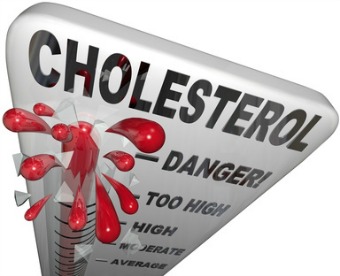
Read 2 articles about Hypertension and cholesterol on page 7 of this document, and in theses others links 1 and 2
  1. Imagine you have to explain to someone what hypertension is, and its relationship with  cholesterol. Write your explanation in English or Spanish. Your teacher will ask you to explain it on our next class.
  2. Answer the exercise on page 8 of the first article, and attach it to the file.
Send the explanation and the exercise to my e-mail, with the title: TEyour name P3WP3